


Scaffolded Experiential Learning Model Connects Classroom Learning to Workplace Experiences
Ask students what they did at their internship, and most will describe tasks completed and hours logged. In Coker University’s School of Business, that’s where the conversation starts.
Dr. James D. Wacker, Dean of Coker’s School of Business, began implementing a scaffolded experiential learning model in 2025 as part of BUS-494: Business Administration Internship to connect classroom learning to real-world workplace experiences.
“What makes BUS-494 distinctive is that we don’t simply place students in internships and ask them to accumulate work hours,” Dr. Wacker said. “The workplace becomes an extension of the classroom, and the course intentionally guides students through connecting what they have learned academically to actual professional experiences.”
Students in BUS-494 complete at least 136 hours in a supervised workplace. Dr. Wacker considers the academic work surrounding those hours equally important. Students set learning and professional goals, reflect each week on their workplace experiences and connect what they see to their current and past coursework. Along the way, they study communication, organizational structure, problem-solving, technology, ethics, leadership and professionalism.
“Those are the kinds of experiences that are difficult to reproduce within the walls of a traditional college course,” Dr. Wacker said. “The results are remarkable because every student’s ‘classroom’ looks different.”
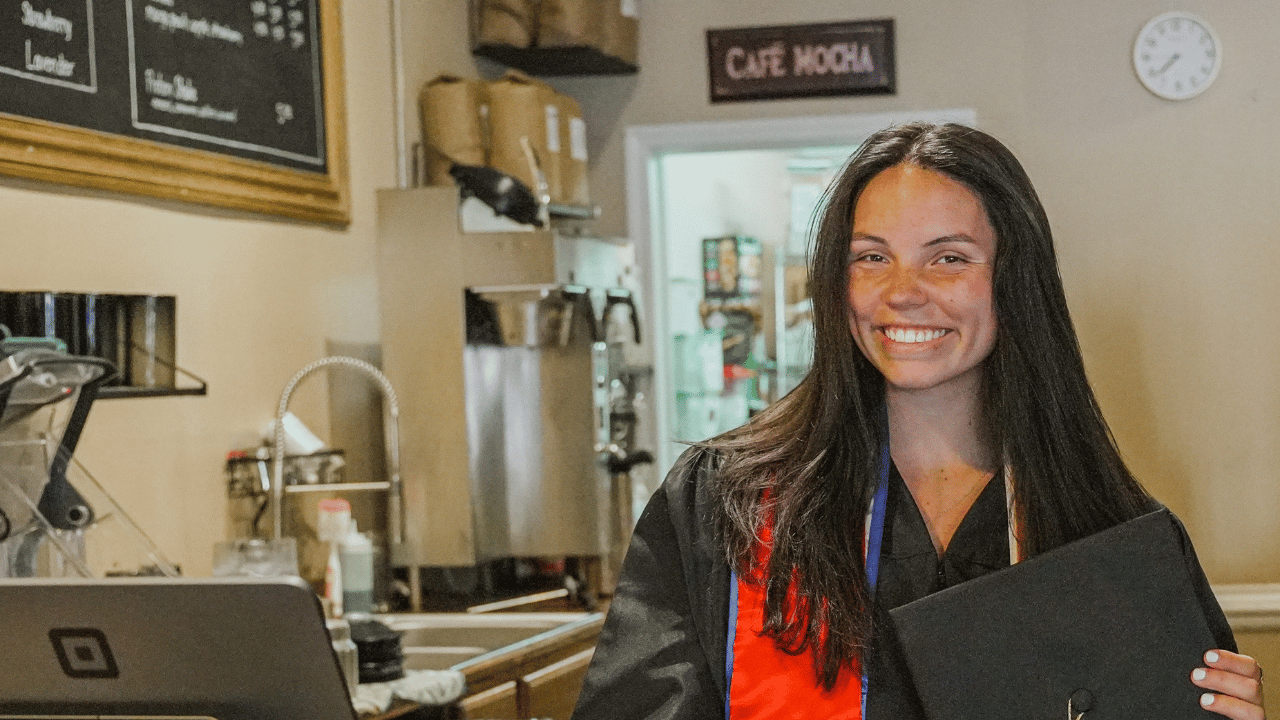
Coker alumna Maddie Fontana said the School of Business gave her the confidence to step into business ownership while she was still a student.
 “BUS-494 let me put what I was learning into practice in real time, with real stakes,” Fontana said. “Today, as owner and operator of Crema Coffee Bar and Catering, I use the leadership, accountability, and operational skills I built at Coker every single day. I’m especially grateful to Dr. Wacker and my other professors, who gave me the grace and flexibility to finish my senior year while running a business. My coursework wasn’t a side project. It applied directly to the business I was running every day.”
Recent BUS-494 students have worked in healthcare, manufacturing, sports management, information technology, construction, and other business settings at companies like General Electric, Sonoco, Duke Energy, Coldwell Banker, Prisma Health, The City of Hartsville, and the local professional hockey team, the Pee Dee Ice Cats.
“They aren’t simply observing. They are solving problems, interacting with customers and colleagues, using professional systems, and contributing to their organizations,” Dr. Wacker said.
For example, one student rotated through six departments of a company, from field operations to the executive office, and ultimately developed a proposal to address an internal communication problem. Another encountered a significant construction project delay and worked with the client and organization to develop an alternative solution that allowed the project to move forward.
Throughout each semester, Dr. Wacker helps students connect their internship experience with what they’ve studied, ensuring they are prepared for their careers. In addition, Sierra Sconzo, Coker’s Career Center supervisor, helps students prepare for the workplace with resume support, etiquette dinners, mock interviews, and placement in local businesses to gain experience.
“Coker’s intentional combination of experience, academic application, reflection, feedback, and career preparation is what turns an internship into a scaffolded experiential-learning course,” Dr. Wacker said. “It creates a pathway from classroom to career.”
